Structure
RNA folds into structures that influence which regions are exposed and available for interactions. A sequence match alone does not fully describe a potential target.
 RNABioPrecisionSyncing biology for health
Synthetic regulatory RNA
Designing RNA for
coordinated gene regulation.
syncBASS is RNABioPrecision’s first technology in development for designing small synthetic regulatory RNAs intended to modulate multiple genes within a biological network.
Discuss a collaborationHow syncBASS works
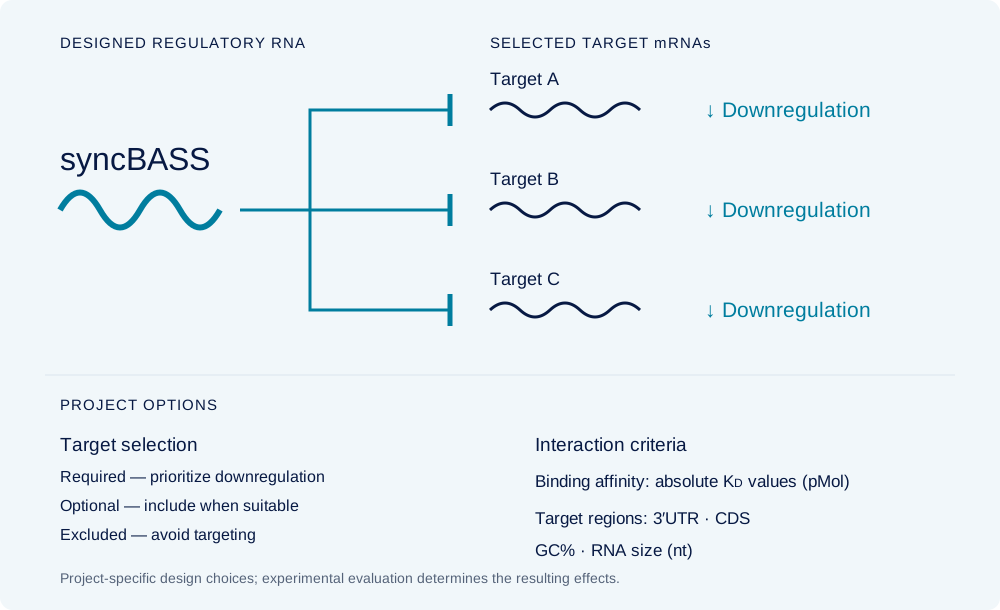
Design begins with the genes we want to downregulate. The resulting RNA is evaluated experimentally to determine the response of each selected target and the combined biological effect.
The biological problem
A biological response can depend on the combined activity of several genes. Changing one component may leave other parts of the network unchanged.
The question behind syncBASS is whether a designed RNA can modulate a selected set of genes together to help produce a desired biological response. The design objective includes both the intended targets and the interactions we want to avoid.
The science behind the approach
RNA regulation offers a foundation for this idea. In natural microRNA pathways, a small RNA can guide recognition of multiple messenger RNAs and influence their expression. Which targets respond depends on sequence pairing and molecular context.
RNA folds into structures that influence which regions are exposed and available for interactions. A sequence match alone does not fully describe a potential target.
We consider whether a target can be recognized by a regulatory RNA and its molecular partners. Sequence compatibility and structural context both inform that question.
Our approach draws on RNA–RNA and RNA–protein interactions to inform design, with the aim of coordinating effects across a selected biological network.
Our design objective
Coordinated regulation means designing toward a defined biological objective across several genes. It does not assume that every target changes by the same amount.
RNABioPrecision combines computational design with mechanistic knowledge of RNA structure, recognizability, and biophysical interactions. The aim is to make regulatory RNA design more precise, robust, and predictive.
Our validation work connects computational predictions to experimental measurements: which targets respond, how strongly they respond, and how their collective downregulation affects cells and biological outcomes.
Experimental validation
RNABioPrecision provides in vitro and in vivo validation to assess the effects of designed regulatory RNAs.
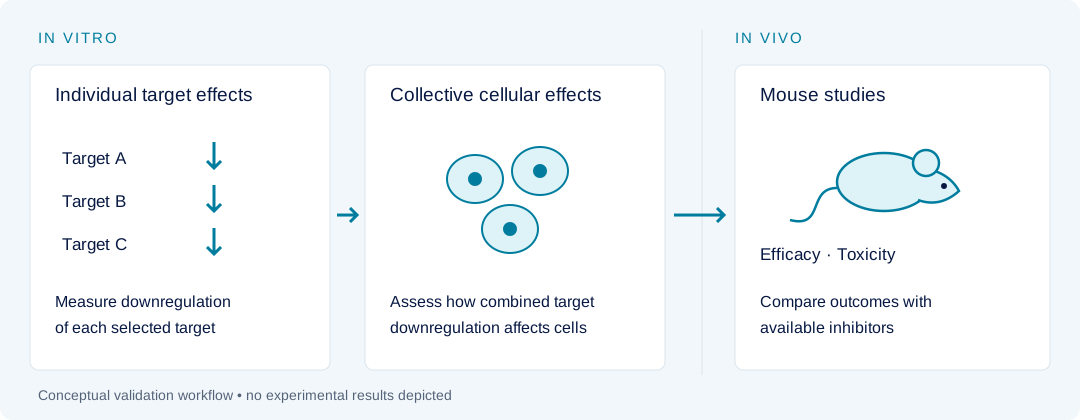
We measure the effect on each selected target and evaluate how their collective downregulation affects cells.
In mouse studies, we measure efficacy and toxicity and compare outcomes with available inhibitors.
Potential applications
We see potential applications in therapeutic research, agriculture, and industrial biotechnology. Each application brings its own requirements for delivery, specificity, and biological performance. Those requirements need to be evaluated in the appropriate experimental setting.
syncBASS is presented here as a technology in development. This page describes the scientific approach and its aims, rather than established clinical outcomes.
Research collaborations